


Why Nnamdi Kanu Refuses To Enter Defence – Kingsley Kanunta Kanu
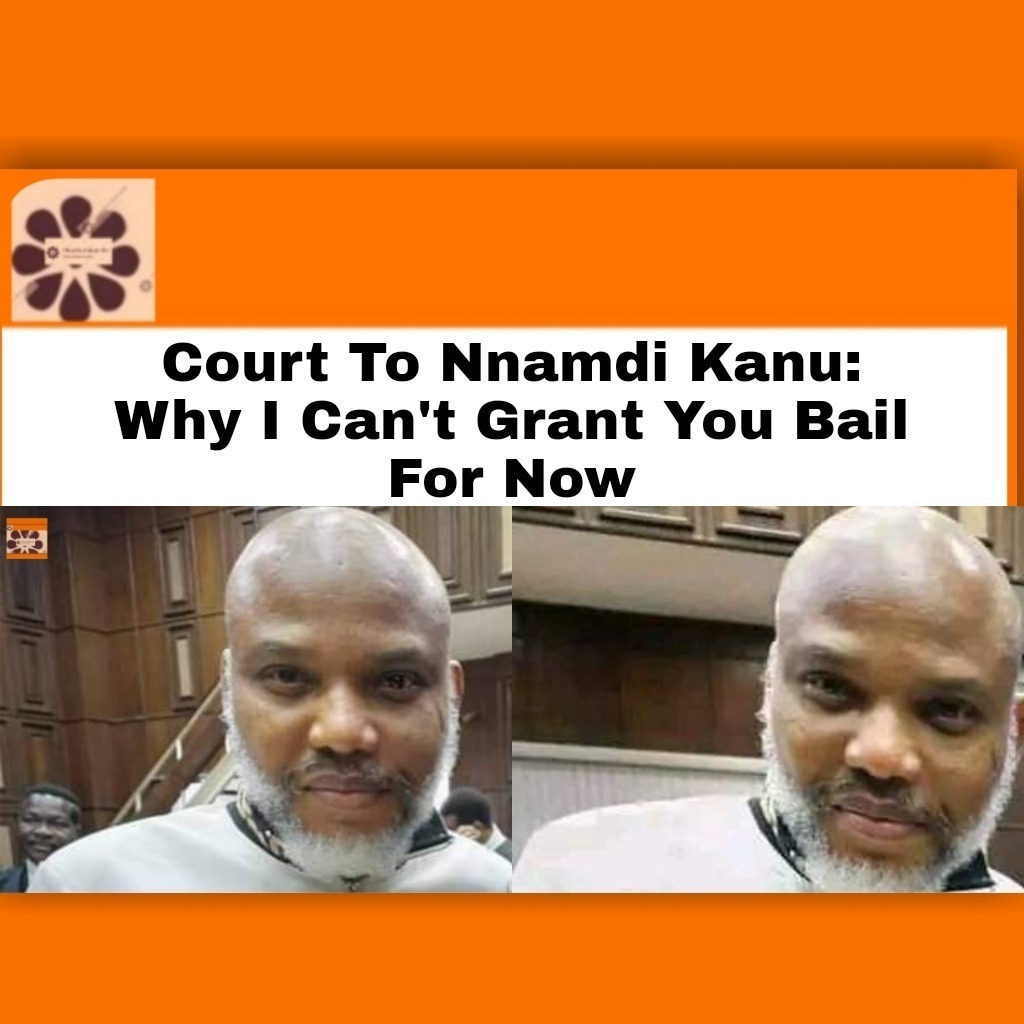
Kingsley Kanunta Kanu, the younger brother to Mazi Nnamdi Kanu in an X post as reshared by Barrister Aloy Ejimakor, the coordinating lawyer for the detained Biafra Republic agitation leader, Mazi Nnamdi Kanu has given reasons why his elder brother had continued to defend himself on the ground of no case submission, saying, the Federal Government of Nigeria who made the accusations and filed the terrorism charges against the Biafra Leader has not been able to pinpoint any aspect of the Nigeria Laws that should warrant his brother, Mazi Nnamdi Kanu to enter defence, citing several court rulings that invalidated the Federal Government accusations against the detained Biafra leader, this, Kingsley Kanunta Kanu stated in reaction to the commentary of Doctor Sam Amadi, published on ThisDay newspaper, after the detained leader of the Indigenous People of Biafra, Nnamdi Kanu, on Monday, abandoned his earlier plan to call witnesses in his ongoing trial before the Federal High Court in Abuja.
Nnamdi Kanu who is being prosecuted on seven counts of terrorism charges brought against him by the Federal Government, last two Friday, had prayed the court for an adjournment after informing the trial judge, Justice James Omotosho, that his former legal team, led by a former Attorney-General of the Federation and Minister of Justice, Chief Kanu Agabi, SAN, had yet to release his case file to him.
Though, Nnamdi Kanu had earlier expressed his readiness to open his defence in a written application to the court, in which he indicated his intention to call witnesses and requested the issuance of witness summons, but, at the resumed hearing on Monday, Kanu told the court that upon reviewing the case file, he had concluded that there was no valid charge against him.
Nnamdi Kanu argued that since he believed the charges were unlawful and that the prosecution had failed to establish any case, there was no need for him to proceed with his defence.
According to Punch Newspaper, the trial judge, Justice James Omotosho, directed Kanu to file a written address formally stating his position and to serve the prosecution accordingly.
Justice Omotosho further advised the IPOB leader to consult experts in criminal law to understand the possible legal implications of his decision.
The judge thereafter adjourned the case to November 4, 5, and 6 for the adoption of final written addresses, based either on Kanu’s position that no case had been established against him or for him to proceed with his defence if he decides otherwise.
Kingsley Kanunta Kanu statement as recirculated by Barrister Aloy Ejimakor on Thursday, tagged “Legal Rejoinder: To the Misleading Commentary by Doctor Sam Amadi, Published in ThisDay of 30th October 2025, Titled: “If I Were Kanu, I Would Not Refuse to Write a Defence” stated as follows below:
“1. Introduction: Correcting a Misguided Narrative: The recent article by Dr. Sam Amadi in ThisDay @ThISDAYLIVE of 30 October 2025, suggesting that Mazi Nnamdi Kanu should “write a defence instead of claiming he has no case,” exemplifies how poorly informed commentary can distort constitutional discourse in Nigeria.
While the piece parades itself as legal analysis, it fundamentally misstates the law and facts of Mazi Kanu’s case. Kanu is not refusing to defend himself; he is asserting the obvious and unassailable fact that there exists no valid, cognisable charge known to Nigerian law for him to defend. That is not defiance — it is constitutional obedience.
2. The Settled Matter of Rendition: A Closed Chapter: Contrary to (Doctor) Amadi’s impression, the illegality of Kanu’s abduction and extraordinary rendition from Kenya has been conclusively settled. It is not in contention and not on trial.
The matter has been determined by:
The Court of Appeal (per Oludotun Adefope-Okojie, JCA) in FRN versus Kanu (CA/ABJ/CR/625/2022) — which discharged Kanu on 13 October 2022 and declared his rendition unlawful; The United Nations Human Rights Council (UNHRC, July 2022) and the UN Special Rapporteur on Counter-Terrorism and Human Rights (March 2023) — both confirming violations of international law;
The Federal High Court, which recognised the illegality of the rendition; and
The Supreme Court, per Emmanuel Agim, JSC, who acknowledged that Kanu’s abduction “was a grave violation of international and domestic law.” Therefore, to suggest that Kanu is “hiding behind rendition” is disingenuous. That issue is res judicata — finally and conclusively determined.
3. The Crux of the Matter: “No Charge Known to Law”: Mazi Kanu’s insistence that he has “no case to answer” rests squarely on Section 36 (12) of the Constitution of the Federal Republic of Nigeria (1999, as amended):
“A person shall not be convicted of a criminal offence unless that offence is defined and the penalty therefor is prescribed in a written law.”
The present charge, FHC/ABJ/CR/383/2015, is built upon laws that have ceased to exist: Counts 1 (to) 5 and 8 are founded on the Terrorism Prevention (Amendment) Act 2013 — repealed by Section 97 of the Terrorism Prevention and Prohibition Act 2022 (TPPA 2022);
Count 15 (now 7) is founded on the Customs and Excise Management Act (CEMA), Cap C45 LFN 2004 — repealed by Section 281 (1) of the Nigeria Customs Service Act 2023; and Counts 1 (to) 6, alleging acts in Kenya, have no validation under Section 76 (1) (d) (Roman figure 3) TPPA 2022, which mandates that the alleged act must be punishable under Kenyan law and certified by a Kenyan court. These are not “technicalities” — they are jurisdictional voids. A man cannot be tried for an offence that is not defined by an existing law. To insist otherwise is to drag the judiciary into constitutional heresy.
4. Constitutional Supremacy and Non-Derogable Immunity: When the Court of Appeal discharged Kanu on 13 October 2022, that discharge triggered the non-derogable constitutional immunity enshrined in Section 36 (9):
“No person who shows that he has been tried by any court of competent jurisdiction for a criminal offence and either convicted or acquitted shall again be tried for that offence or for an offence having the same facts constituting that offence.”
This immunity is permanent, self-executing, and non-derogable, as confirmed by Sections 1(3) and 45(1) of the Constitution. No law, court, or executive order can override it. Even in times of national emergency, this right remains untouchable.
Thus, the Supreme Court’s remittal order of 15 December 2023, being inconsistent with Section 36 (9), cannot lawfully revive a null charge. Under Section 1 (3), any act inconsistent with the Constitution is void ab initio”.

Osazuwa Akonedo
Osazuwa Akonedo is a Nigerian media professional, author, and consultant. His work spans various sectors of communication and literature: Journalism and Media: He is the founder of OsazuwaAkonedo, which focuses on news analysis and commentary. He also provides consultancy services in media and banking. Literature: He is a published playwright and author of Nigerian literature. One of his notable works is the drama titled The End Shall Tell: What Exam Malpractice Can Cause, which addresses educational and social issues in Nigeria. Reporting: He frequently reports on regional news, particularly concerning Edo State and broader Nigerian current affairs. Credit: Google Gemini AI Mode Osazuwa Akonedo is a Nigerian media creator, journalist, and entrepreneur who engages audiences via news reporting, social media content, music, and a mobile application. Professional Background and Company Osazuwa Akonedo is associated with OSAZUWAAKONEDO LIMITED, a company registered in Nigeria that operates in media consultancy and news services The company is headquartered in Benin City, Edo State, Nigeria, and has been active in publishing news in various formats including text, audio, video, and photos Social Media and Online Platforms Osazuwa Akonedo maintains a strong online presence on several platforms: TikTok: Shares news updates and reports, for example, covering police operations in Nigeria YouTube: Operates a channel where he uploads videos on current affairs and news content Twitter/X: Active under the handle @akonedo_osazuwa, posting updates on events and news Facebook: Profiles listing his connection to news and media activities can be found on Facebook Mobile App: Offers a dedicated mobile application for news access through Google Play (Osazuwa Akonedo News App) providing text, video, and photo news formats News Reporting and Content He produces news content covering national and local stories, including criminal activities, government updates, and investigative reports His reporting spans multiple formats, making it accessible to a wide audience through online platforms, mobile apps, and social media Other Contributions In addition to journalism, Osazuwa Akonedo has also ventured into audio releases, such as “Former Justice Minister Abubakar Malami Begs Nigerians For Justice” released on January 25, 2026 He also hosts podcasts documenting significant events, e.g, NDLEA arrests related to historical criminal cases Summary Osazuwa Akonedo is a multifaceted media professional engaged in journalism, social media content creation, music, and technology via his news app. He utilizes platforms like TikTok, YouTube, Twitter/X, Facebook, and mobile applications to disseminate news and reach audiences both locally and internationally Credit: Azure AI






6 thoughts on “Why Nnamdi Kanu Refuses To Enter Defence – Kingsley Kanunta Kanu”